


 English
 Hrvatski
 Slovenščina
Kako pripremiti zid prije lijepljenja tapete? Vodič za savršen rezultat
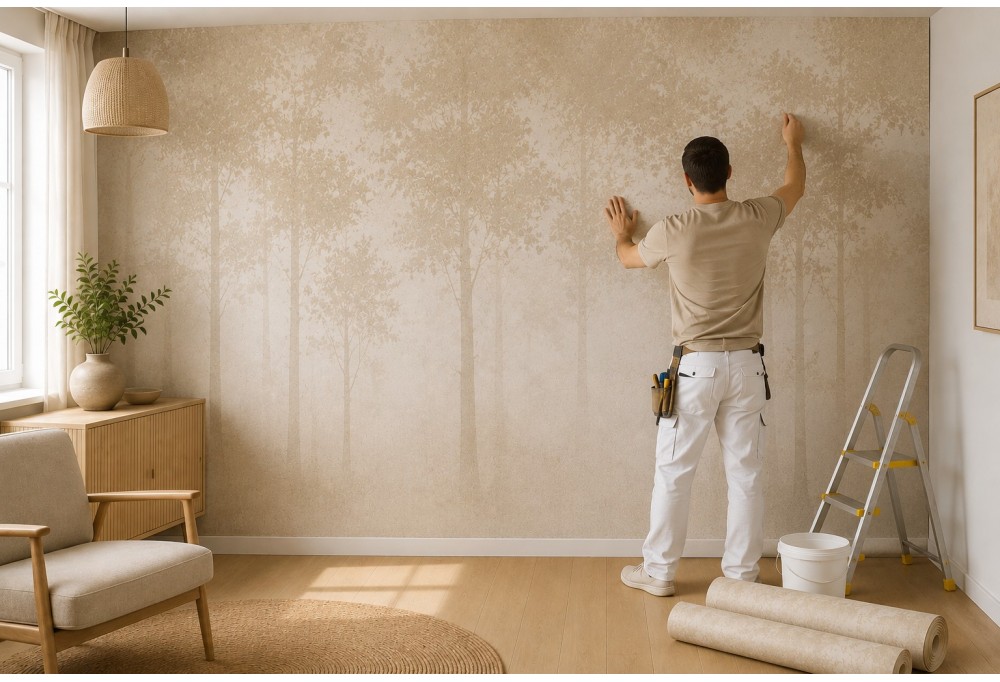
Proper wall preparation is one of the most important steps in achieving a flawless wallpaper installation. Whether you're decorating a living room, bedroom, children's room, or office, a well-prepared surface ensures easier installation, better adhesive performance, and a beautiful long-lasting finish.
Below are a few simple tips to help you achieve the best possible result.
1. Make Sure the Wall Is Clean
Before installing wallpaper, thoroughly remove dust, cobwebs, and any other dirt from the wall.
If there are grease stains or other contaminants, clean them using a suitable cleaning product so the adhesive can bond properly to the surface.
2. The Wall Must Be Completely Dry
Wallpaper should only be installed on completely dry walls.
If the wall has been exposed to moisture or shows signs of mould, first eliminate the source of the problem and allow the surface to dry completely.
Wallpaper should not be installed on damp or moisture-exposed surfaces.
3. Fill Holes and Cracks
Fill all holes left by screws, wall plugs, or nails with filler.
Once dry, lightly sand the surface to create a smooth and even wall.
4. Wallpaper Does Not Hide Wall Imperfections
Wallpaper is not designed to conceal major wall defects.
Large uneven areas, cracks, bumps, or poorly finished joints may remain visible after installation. The smoother and better prepared the wall, the more attractive the final result will be.
5. Remove Old Wallpaper
Installing new wallpaper over old wallpaper is not recommended.
Remove the old wallpaper completely, including any remaining adhesive, and prepare the wall as if it were being repainted.
6. Check What Type of Paint Is on the Wall
Wallpaper can be installed on most walls painted with high-quality water-based emulsion paints, provided the paint is sound, does not peel, and the surface is clean and dry.
Wallpaper should not be installed on walls coated with oil-based or vinyl paints, as wallpaper adhesive cannot achieve proper bonding on these surfaces. In such cases, the existing coating should be removed or the surface should be properly prepared beforehand.
7. Allow Fresh Paint or Filler to Dry Completely
If you have recently painted or skim-coated the wall, allow it to dry completely before installing wallpaper.
Installing wallpaper too soon may lead to poor adhesion or air bubbles.
8. Apply a Primer If Necessary
If the wall is highly absorbent, for example after plastering or sanding, applying a primer is recommended.
A primer reduces the wall's absorbency, allows the adhesive to spread more evenly, and improves wallpaper adhesion.
9. Use the Right Adhesive
The type of adhesive depends on the type of wallpaper.
For our non-woven (fleece) wallpapers, we recommend using a high-quality adhesive specifically designed for non-woven wallpaper. The adhesive is applied directly to the wall, making installation quicker and easier.
Conclusion
Proper wall preparation is the foundation of a successful wallpaper installation. A clean, dry, and smooth wall provides better adhesion, easier installation, and a beautiful long-lasting finish.
Please remember that wallpaper should not be installed on walls coated with oil-based or vinyl paints or on damp surfaces. If you're unsure whether your wall is suitable, feel free to contact us—we'll be happy to help.
In Same Category
- Istrian Kažun – A Symbol of Istria Transformed into Wallpaper Design
- Apoxyomenos – A Story from the Depths of the Adriatic Transformed into Wallpaper Design
- When a Wall Becomes Part of the Brand: A Case Study in Personalized Office Design
- From a Child’s Room to a Birthday Celebration: How to Create a World Made Just for Them
- Why Choose Self-Adhesive Wallpaper? The Difference You’ll Notice During Installation